
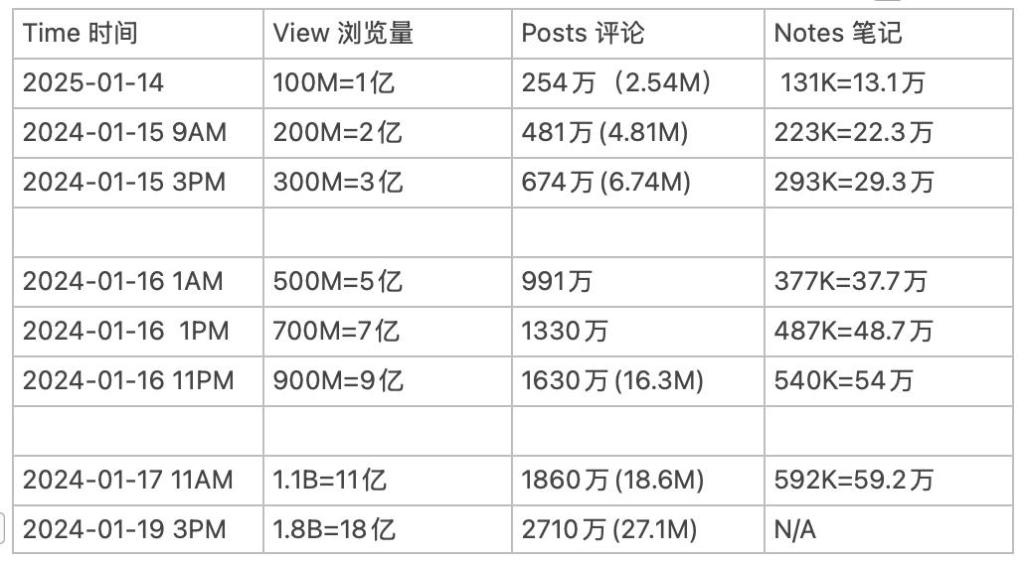
过去一周,小红书的“TIKTOK难民”现象引起了广泛关注。因此,我统计了一下tiktokrefugee标签的浏览量、发布笔记数量和评论数量。值得注意的是,这里的浏览量仅针对一个标签。在同一内容情况下,可能会附加不同标签,甚至没有标签。反之,不是所有在此标签下的内容都是外国人,完全不相关内容也会蹭流量使用这些标签发布内容。因此,我们只能大致判断趋势,并不能获得精准的数据。此外,本文仅代表个人的观察和观点。
首先,大家很好奇为什么TikTok用户都涌向小红书,这一现象的推动因素我观察认为主要有两个:一是头部博主向粉丝推荐小红书;二是因为小红书的互动氛围比较友善,很多素人发一段简短的自我介绍也收获了成千上万点赞好评,于是群众之间口口相传,造成了这种效应,比如这里,这里,这里。
为什么不是其他脸书旗下的产品?最简单的解释就是,他们反对脸书的垄断,不喜欢扎克伯格,因此抵制所有扎克伯格旗下的产品。扎克伯格曾多次在公开场合批评TikTok,称其对西方价值观构成威胁。这种言论可能引发TikTok用户的不满,认为他是在试图打压竞争对手。同时美国政府提出的禁Tiktok原因之一是,认为中国会偷了他们的数据,并且存在间谍在监听,于是用户的叛逆心理促使他们直接将数据搬到小红书并且揶揄在寻找自己的中国间谍。
为什么不是中国的抖音?我用澳洲的手机号注册了一下,注册可以接收验证码,但是马上弹出实名认证引导,建议绑定+86开头的手机号或完成实名信息验证。实名认证需要输入真实姓名和身份证号,我尝试使用一个高仿姓名和格式一样的身份证号,无法通过实名认证,所以这阻挡了绝大部分外国人。
再来看一下此次事件的影响。小红书在在美国、澳大利亚、英国、意大利百、瑞士等70多个国家地区登上苹果应用商店免费下载榜第一。这体现了英语的影响力,在美国大约七十万英语使用者的推广,可以在七十多个国家产生快速的影响力。为什么其他国家没有禁止使用也跟进了下载?因为大部分生产流量大的头部博主在美国,类似于新马华人也扎堆在小红书,因为本国的中文内容产量太小。
从另一个角度来看,如果中国企业出海,只需在这些国家推广到约二十万的日新增量,然后在国内宣传“出海成功”。通过低成本的国际推广再回国进行二次宣传,可以在中间赚取利润差价。类似于在纽约时代广场投放大屏广告,效果和性价比都非常高。
关于禁言的情况,根据我看到的不完全统计,笔记审核时间延长。相关的英文内容更容易发出去,相关的中文更容易被审查。我前天晚上发布的一篇笔记,第二天早上起来还没有发布成功,有的甚至审核时间达到48小时。同时,部分犹太人、LGBT群体以及黑人发布的帖子很快就被删除。表达对领导人喜爱的帖子也很快被删除。有西班牙网友表示自己从小被领养,现在想看看家乡的信息,评论区有人提醒可能是间谍,不要给他发送照片。另外,有不少中国营销号作假,一些典型的营销号声称想学中文或英文,收费二十美元每小时,我甚至怀疑背后可能有缅甸电诈团的运作。对于反映美国水深火热的内容,往往会获得更多流量和点赞,相反的内容则推荐较少。不少评论反应中文的高质量内容变多。
至于后续发展,第一个问题是流量变现困难。小红书的变现能力远不如油管,甚至连其在美国的对标产品TikTok也不及。根据我个人使用小红书的经验,累计百万的浏览量从来没有给我带来任何流量收入,我间接在小红书上赚钱主要通过发布租房信息,二手信息等。因此,我认为这些外国流量博主不会将其作为主要平台。第二个问题是审查机制。如果用户是反抗美国政府不自由的人,面对更为严格的审核机制,我对其后续发展持不乐观态度。
My Observations on the TikTok Refugee Phenomenon
Over the past week, the phenomenon of “TikTok refugees” on Xiaohongshu or RedNote has garnered widespread attention. In response, I analyzed the number of views, posts, and comments under the #tiktokrefugee tag. It’s worth noting that these view counts only apply to a single tag. Posts with the same content may use different tags or no tags at all. Conversely, not all content under this tag comes from foreigners—some irrelevant content may also exploit the tag for visibility. Therefore, while we can identify general trends, precise data is unattainable. Additionally, this article reflects only my personal observations and opinions.
Why Are TikTok Users Flocking to Xiaohongshu?
From my perspective, two main factors drive this phenomenon:
- Recommendations from influencers: Prominent TikTok creators have been guiding their followers to Xiaohongshu.
- Friendly interaction environment: Xiaohongshu’s community fosters a welcoming atmosphere, where even short self-introduction posts by ordinary users often garner thousands of likes and positive comments. This word-of-mouth effect has significantly amplified the trend.
Why Not Meta’s Products?
The simplest explanation is that they oppose Meta’s monopoly and dislike Zuckerberg, leading them to boycott all Meta-owned platforms. Zuckerberg has publicly criticized TikTok multiple times, labeling it a threat to Western values. This rhetoric may have alienated TikTok users, who see it as an attempt to suppress competition. Furthermore, the U.S. government’s argument for banning TikTok includes fears of Chinese data theft and espionage. In defiance, some users cheekily move their data to Xiaohongshu, joking that they are “seeking their personal Chinese spy.”
Why Not Douyin (Chinese TikTok)?
I registered for Douyin using an Australian phone number. Although registration allowed me to receive a verification code, the app immediately prompted me to complete identity verification. It suggested linking a phone number with a +86 prefix or submitting real-name verification, which required entering a valid Chinese name and ID number. My attempt to use a plausible fake name and ID number failed, blocking most foreign users from accessing the platform.
The Impact of This Phenomenon
Xiaohongshu recently topped the App Store’s free download charts in over 70 countries and regions, including the U.S., Australia, the UK, Italy, and Switzerland. This highlights the power of the English language. With around 700,000 English-speaking users promoting Xiaohongshu in the U.S., the platform quickly gained traction across multiple countries. Why are other countries following suit despite not banning TikTok? The answer lies in the dominance of American content creators, who drive trends. Similarly, many Chinese users in Southeast Asia (e.g., Singapore and Malaysia) flock to Xiaohongshu because their local Chinese content output is too limited.
From another perspective, this trend demonstrates a potential strategy for Chinese companies going global. By achieving a daily growth of approximately 200,000 new users in key countries, they can then market their “success abroad” domestically. Low-cost international marketing followed by domestic promotion can generate significant profit margins. This approach is akin to placing ads on a New York Times Square billboard, delivering both effectiveness and cost efficiency.
Challenges and Issues
- Content Moderation Delays
Based on my observations, note reviews are taking longer. English-language content appears to get approved more easily, while Chinese content faces stricter scrutiny. For instance, a note I posted one evening wasn’t published until the following morning, with some reviews taking up to 48 hours. Additionally, some posts from Jewish, LGBT, and Black users are deleted quickly. Comments expressing admiration for the CCP leader are also swiftly removed. A Spanish Chinese user who mentioned being adopted as a child and wanting to learn about his hometown faced suspicion, with some commenters accusing them of being a spy(This is not a joke). - Scams and Misrepresentation
Fake marketing accounts are prevalent. Some claim to teach Chinese or English for $20 an hour, but I suspect these may be fronts for fraud operations, potentially linked to Burmese scam rings. Posts portraying America as struggling often receive more visibility and likes, while contrary content is less promoted. Many users report a noticeable increase in high-quality Chinese content.
Future Developments
- Monetization Challenges
Xiaohongshu’s monetization capabilities lag far behind those of YouTube and even TikTok in the U.S. In my personal experience, even posts with cumulative views in the millions have never generated direct revenue for me. My primary means of earning money on Xiaohongshu is through indirect methods, such as posting rental or second-hand listings. Therefore, I doubt that foreign content creators will adopt Xiaohongshu as their primary platform. - Censorship Mechanisms
For users rebelling against the lack of freedom in the U.S. government, Xiaohongshu’s stricter censorship may present an even greater challenge. Given this, I am skeptical about the platform’s long-term appeal among such users.

 imzhuting.com
Leave a comment / 留言会在审核后公开,可备注不公开仅作者可见