

我的手机不见了。
昨天(12月10号)晚上九点多,也就是丢失五个小时后,我才发现这个情况。
五个小时前,我匆忙赶到图书馆还书和借书,借书还有两天就要超时了。图书馆的停车场有四五层,底下几层几乎总是满的,所以通常我得绕几次弯开到上面几层才能找到车位。
相比之下路边的停车就方便多了,缺点是有半小时的时间限制,超时要罚款。我思考了一下,决定就在路边停半小时,快速还掉快到期的书,然后再借几本新书,半个小时内应该能搞定。结果在匆忙找书过程中,手机可能落在书架的某个地方。回家的路已经非常熟悉,不需要导航,我两手抱着书,也没有意识到手机不见了。
再仔细回忆一下,停好车后,我一手攥着手机和钱包,一手拿着车钥匙。后来为了完成还书这个动作,我把书从背包里拿出来,于是(我记得)顺手把手机钱包都放进了包里。奇怪的是钱包还在包里,手机却不见了。
回到家,我破天荒没有玩手机,因为有一本书特别吸引我,就一口气看了四五个小时。其实这种情况特别罕见,一般的书我都是看不完整本的,但这本书比较有意思,看了四五个小时,后面有机会再详细说说。
看完书后想用手机查点书评时,这才发现手机不见了。到这时已经过去了五个小时。我第一时间以为是忘在车里了,因为忘在车里充电的情况发生过几回,又去车库里来来回回找了两次,一无所获。
这时才想起打开了另一台苹果设备可以查看同一苹果ID手机的地理位置,令我稍微安心的是,手机还在距离我一公里外的图书馆。此时图书馆已经停止营业,这说明它没有被人带走,要么还静静躺在某个书架上,要么被人捡到并交给了前台。
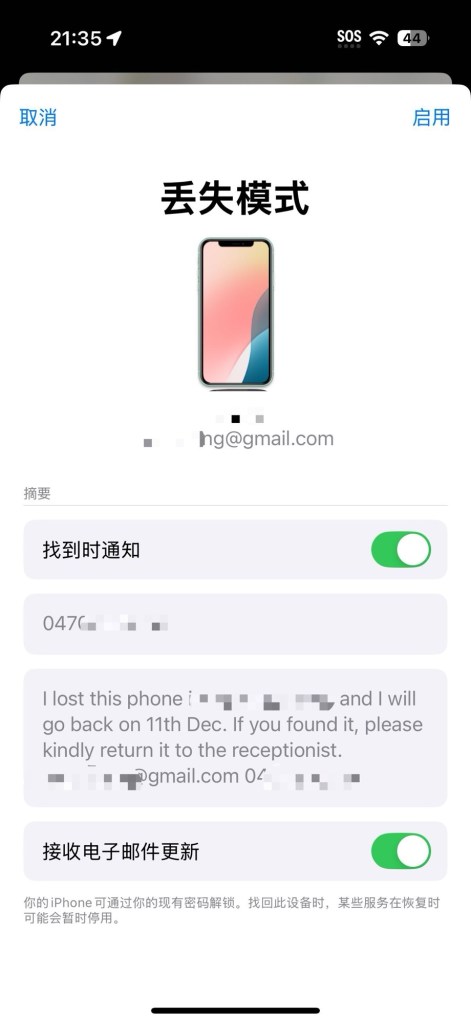
于是我搜索这时候应该怎么处理,第一步是要开启了手机的丢失模式。最坏的情况是,电话卡被盗用,通过刷机能破解屏幕开锁密码,然后通过电话号码加验证码可以登录很多应用软件。开启丢失模式可以锁定设备,并显示一条消息在屏幕上,同时禁止支付功能。可以说,丢失模式在这刻起了至关重要的作用,也是我心态还在线的原因。
我对自己居住的社区治安并没有很大的信心,在数据统计上,它的治安水平只处于勉强城市平均水平。偷快递的事也时常听说,前几个月我的快递差点就丢了,我在网上买了一副眼镜,它的度数只适合我使用,被装在一个小盒子里。快递送来的时候把它丢在了我的门口。(在澳洲,快递不会打电话通知,会发一条短信是否同意直接放在家门口,不同意就需要自己去邮局领取)。
当我看到快递追踪显示已经送达时,出门找快递盒。邻居家大约是一个装修师傅正在抬着东西进进出出,我门口绿化带植被从里找来找去也没有看到。这时装修师傅问我是不是在找一个小盒子,我说是的,他告诉我他捡了那个小盒子,把它放在了他的车里,让我去他的车上拿。
我当时心里真的哭笑不得。你知道那个盒子里装的是什么吗就往自己车里捡?这个眼镜根本对他没有任何用处,找到和我度数相同的人也不太容易。我没有把怒火表达出来,以免矛盾升级。而且对方显然已经感到情况不妙,没有假装什么都没有发生。所以我猜测他应该是新来的,对快递直接丢门口的规则并不清楚,也不想和他争执理论。这区的流动人口多,如果有人很快把手机顺走,然后盗取个人信息或者去刷机去销赃,我也不会觉得意外。隐隐约约记得有网友分享过自己的手机很快就到了深圳华强北的帖子。
所以我总结了一些万一手机找不回来了的要点
- 需要尽快向运营商报备停止发送验证码,避免捡到的人通过电话号码加验证码就可以登录许多软件
- 考虑到即时通讯、银行支付软件等等,开启手机的丢失模式可以禁止数据被访问
- 在这期间收到任何提示需要锁屏密码苹果ID等的都要仔细甄别,大多是来钓密码的
- 最后万不得已可以选择清除远程数据,保护隐私不被泄露
今天早上图书馆开门后,我第一时间回到图书馆询问前台是否捡到一台手机。前台问了我丢失的时间和手机的样式,然后带我到她们办公室,从办公室里拿出了我的手机,让我当场用密码开锁后就还给我了。我多问了一句,是有人捡到了并送到前台吗?她们说是的,我表示非常感谢。
我又想起了我上两次手机丢失的经历。第一次是在2010年的春节,全家人一起去寺庙上香。春节寺庙里人声鼎沸,摩肩接踵,我好不容易穿过人群把香插在香炉里。等我走出人群后,发现手机不翼而飞。显然扒手趁人多从我的口袋里把手机拿走了。第二次是在2014年暑假,在公交车上,我选择了倒数第二排的位置。公交车上人不多,全程我记得只有另一个人坐到了我后面。在那二十分钟的路程中,我放松心情欣赏窗外的风景。下车后我准备从包里拿手机,才发现手机不见了。很明显,是坐我后排的人趁我没注意,拉开了我的包,把手机拿走。他还将拉链拉回去了,整个动作小心翼翼,而我毫无察觉。不得不佩服他的专业程度。从那以后,我出门去人多的地方都会把背包放在前面。
十年前我用的还是非智能手机,主要打电话发短信,没有绑定银行卡等支付方式。现在想起来,如果这部携带了我诸多个人信息的智能手机不见了,接下来,挂失手机卡,修改各类密码,通知亲友手机丢失防止上当受骗,冻结手机内各类钱包,我可有的忙了。
幸运的是,十二小时后它安然无恙地回来了,失而复得的感觉真好。
Yesterday evening, December 10th, at around 9 pm, I realized my phone was missing—five hours after it was lost.
Five hours earlier, I had hurried to the library to return and borrow books. The books I wanted to borrow were about to exceed their borrowing limit in two days. The library’s parking lot has four or five levels, and the lower levels are almost always full. Usually, I have to loop around a few times to find a spot on the upper levels.
By contrast, street parking is much more convenient, though it comes with a 30-minute time limit, and fines for overstaying. After some thought, I decided to park on the street for 30 minutes, quickly return the overdue books, and borrow new ones. I figured I could wrap everything up within half an hour. But while I was rushing to find books, my phone likely ended up on a bookshelf somewhere. Since I’m very familiar with the way home, I didn’t need navigation, and holding the books in both hands distracted me from realizing my phone was gone.
Recalling the situation carefully, after parking, I had my phone and wallet in one hand and my car keys in the other. To return the books, I took them out of my backpack and (I thought) placed the phone and wallet into the bag. Oddly, the wallet was still there, but the phone was missing.
When I got home, I did something unusual: I didn’t check my phone. Instead, I was engrossed in a particularly interesting book and read non-stop for four or five hours. Typically, I don’t finish books in one sitting, but this one was captivating. I’ll share more about it another time.
After finishing the book, I wanted to check some reviews online, and only then realized my phone was missing. By this point, it had been five hours. At first, I assumed I had left it in the car because I’ve occasionally forgotten it there while charging. However, after searching the garage twice, I found nothing.
Then I remembered I could use another Apple device to locate the phone using the same Apple ID. To my relief, the phone was still at the library, about a kilometer away. By that time, the library was closed, which suggested it hadn’t been taken. It was likely either sitting quietly on a shelf or had been handed in at the reception.
I searched online for advice on what to do and learned the first step was to enable Lost Mode on the phone. The worst-case scenario was the SIM card being misused, the screen lock bypassed through a reset, and apps accessed using phone numbers and verification codes. Lost Mode locks the device, displays a message on the screen, and disables payment features. It’s fair to say Lost Mode was a crucial step that kept me calm.
I don’t have much faith in the security of my neighborhood. Statistically, it’s just barely at the city’s average. Stealing others’ parcels occasionally occurs here. A few months ago, I almost lost a package—a pair of glasses I ordered online, custom-made with my prescription. It arrived in a small box and was left outside my door. (In Australia, couriers don’t call upon delivery; they send a text asking if you agree to have the package left at your door. Otherwise, you must pick it up from the post office.)
When I saw the tracking status marked as “delivered,” I went outside to look. A contractor working at a neighbor’s house was moving items back and forth, but I couldn’t find my package among the plants near the entrance. The contractor asked if I was looking for a small box. When I said yes, he admitted he had picked it up and put it in his car. He told me to retrieve it from there.
I was stunned. Why would you pick up a random package and put it in your car? The glasses were of no use to him unless he found someone with the exact same prescription. I held back my frustration to avoid escalating the situation. The contractor, sensing something was wrong, didn’t try to deny it. I guessed he was new and unfamiliar with the practice of leaving packages at the door, so I didn’t argue further. Given the transient population here, if someone had quickly snatched my phone, stolen my data, or sold it, I wouldn’t have been surprised. I vaguely remembered seeing posts online about lost phones ending up in Shenzhen’s Huaqiangbei.
Here’s what I learned in case I couldn’t recover my phone:
- Notify the service provider to stop verification codes from being sent. Otherwise, someone could access apps using phone numbers and codes.
- Activate Lost Mode to lock the phone and prevent data breaches.
- Be cautious about phishing attempts asking for screen lock passwords or Apple ID details.
- As a last resort, remotely erase the phone to protect personal information.
This morning, as soon as the library opened, I went to the front desk to ask if a phone had been found. The staff asked for details about the time and appearance of the phone, then brought it out from their office. After I unlocked it with my password, they returned it to me. I asked if someone had handed it in, and they confirmed. I expressed my gratitude.
This reminded me of two other times I lost a phone. The first was during Lunar New Year in 2010, when I visited a temple with my family. The temple was crowded, and as I made my way through the throng to place incense in a burner, a pickpocket took my phone from my pocket. The second was in the summer of 2014, on a bus. I sat in the second-to-last row, with only one other person sitting behind me. During the 20-minute ride, while enjoying the scenery outside the window, the person behind me unzipped my bag, took my phone, and carefully zipped it back up. I didn’t notice a thing. Since then, I always wear my backpack in front when in crowded places.
A decade ago, I was using a non-smartphone for calls and texts. Losing it wasn’t a huge deal. But now, losing a smartphone packed with personal data would mean hours spent freezing accounts, changing passwords, notifying friends and family, and locking mobile wallets.
Fortunately, my phone came back unharmed after 12 hours. The feeling of recovering something you thought was gone forever is truly wonderful.
 imzhuting.com
Leave a comment / 留言会在审核后公开,可备注不公开仅作者可见